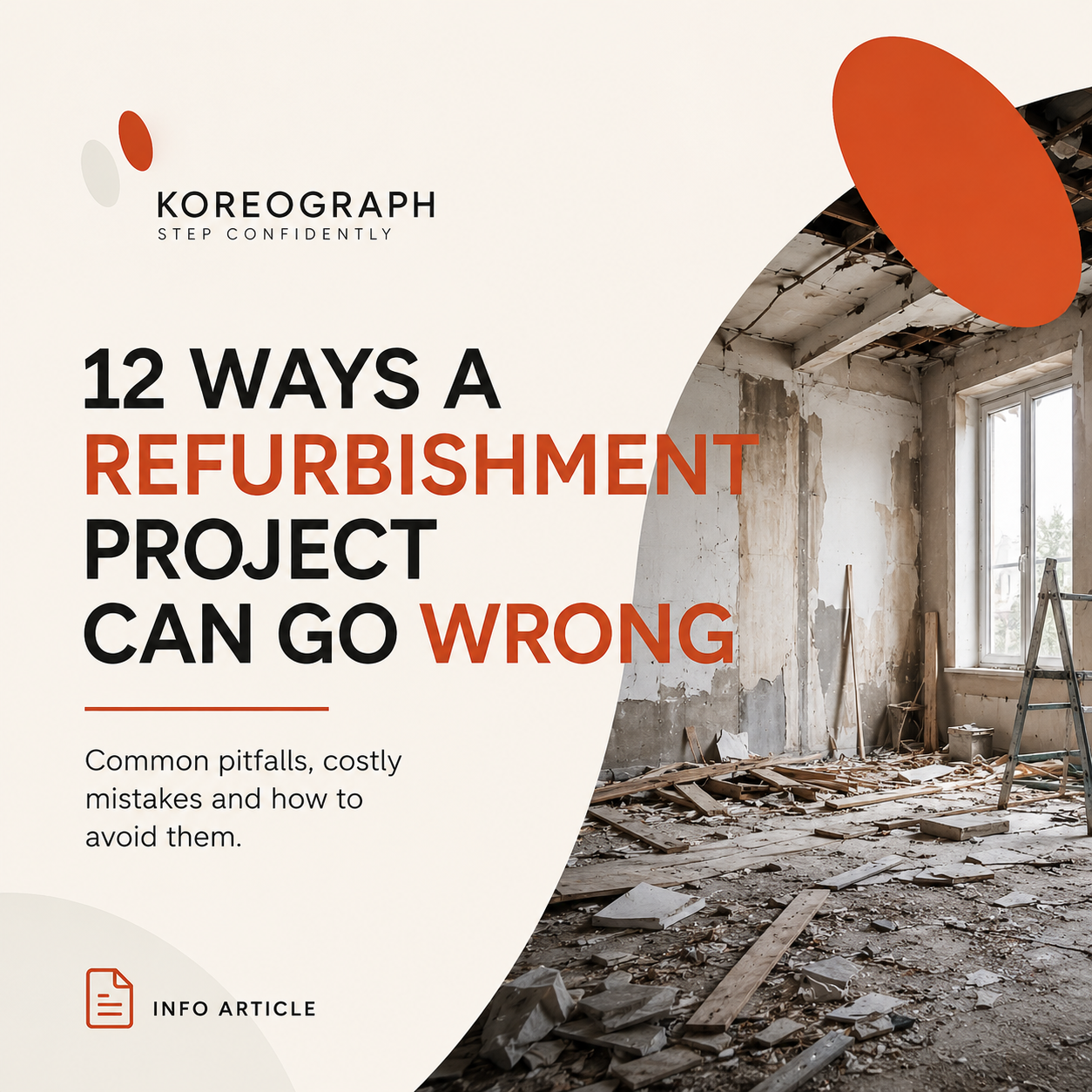
Refurbishment projects in UK property investing often fail because of underestimated costs, delays, weak contractor selection, poor contingency planning, and unrealistic end-value assumptions. The post emphasizes that projects can appear profitable until cash flow tightens or refinancing becomes difficult.
It argues that successful investors plan for problems, budget conservatively, protect liquidity, and avoid over-improving properties. The overall message is that downside protection and disciplined execution matter more than aggressive upside.
Refurbishment projects rarely fail because of a single catastrophic mistake.
Most problems come from:
- optimistic assumptions
- underestimated costs
- poor sequencing
- weak contingency planning
The dangerous part is that many refurb projects still look profitable on paper right until cash flow tightens, timelines slip, and refinancing becomes difficult.
The investors who survive long-term are not the ones who avoid problems entirely.
They are the ones who:
- expect problems
- price them properly
- leave room for them financially
Here are some of the most common ways refurbishment projects go wrong in UK property investing.
1. Underestimating refurbishment costs
This is the classic mistake.
Many investors price works based on:
- ideal scenarios
- builder estimates without contingency
- cosmetic assumptions
Then discover:
- damp
- structural movement
- outdated electrics
- rotten joists
- plumbing failures
- asbestos
- roof issues
Older UK housing stock can hide serious surprises.
A £40,000 refurb can become:
- £65,000 very quickly.
The issue is not just extra spend.
It is:
- additional finance costs
- delays
- reduced margins
- refinancing pressure
2. Assuming everything is “light refurb”
Many projects marketed as:
“light cosmetic refurb”
actually require:
- full rewires
- replumbing
- new heating systems
- structural work
- building regulation upgrades
Especially in:
- ex-rental stock
- probate properties
- tired HMOs
The property may look cosmetic but fail modern standards once works begin.
3. Poor builder selection
Cheap quotes are often expensive in the long run.
Common issues include:
- disappearing contractors
- poor workmanship
- weak project management
- unrealistic timelines
- cash flow disputes
- unfinished works
Many investors lose months because:
- the builder underpriced the job
- then abandoned the project halfway through.
Good contractors are rarely the cheapest.
4. Running out of contingency
Every refurb should include contingency.
Yet many investors budget:
- right up to the limit.
Then one unexpected issue appears.
Without contingency:
- works slow down
- corners get cut
- stress increases
- refinancing risk rises
Professional investors often allow:
- 10–20% contingency minimum
especially on older properties.
5. Delays destroying profitability
Time matters enormously in refurb projects.
Every additional month may increase:
- bridging interest
- utility costs
- insurance
- council tax
- opportunity cost
A profitable deal can become mediocre simply because:
- the timeline doubled.
Refurbishments often slip because of:
- contractor availability
- material delays
- inspections
- redesigns
- planning complications
6. Over-improving the property
Many investors refurbish emotionally rather than commercially.
Examples:
- luxury kitchens in low-value areas
- expensive finishes tenants will not pay for
- unnecessary structural redesigns
- premium bathrooms in average rentals
The important question is:
“Will the market pay for this improvement?”
Not:
“Does this look impressive?”
Over-specification destroys return on capital surprisingly often.
7. Misjudging the end value
Some investors assume:
- refurbishment automatically creates value.
It does not.
The market ultimately determines value.
Problems arise when:
- comparable evidence is weak
- refinance assumptions are optimistic
- demand is misunderstood
A property expected to refinance at:
- £300,000
may value at:
- £260,000
This can trap investor capital inside the deal.
8. Planning and compliance surprises
Many projects accidentally trigger:
- planning issues
- licensing requirements
- building regulation upgrades
Examples:
- changing layouts
- adding bedrooms
- converting lofts
- moving kitchens
- splitting units
Even “simple” works can create compliance obligations.
Fire regulations alone can materially change costs in:
- HMOs
- flat conversions
- mixed-use projects
9. Refinancing becomes impossible
Many refurb strategies rely on:
- refinance as the exit.
But refinancing can fail because:
- valuations disappoint
- lender criteria changes
- income stress testing tightens
- lease issues emerge
- documentation is incomplete
Without refinance:
- bridging lenders still need repaying.
This is where projects become dangerous.
10. Cash flow pressure during the project
Refurbs consume cash continuously.
Common drains include:
- staged contractor payments
- materials
- unexpected repairs
- finance servicing
- vacancies elsewhere in the portfolio
Some investors underestimate how much liquidity a refurb requires.
The problem is often not profitability.
It is:
- running out of working capital before completion.
11. Market conditions change mid-project
Refurbs expose investors to market timing risk.
During longer projects:
- interest rates may rise
- mortgage affordability may tighten
- buyer demand may weaken
- values may soften
This particularly affects:
- flips
- high leverage projects
- speculative developments
A strong deal at acquisition can weaken materially by exit.
12. The investor becomes the bottleneck
Many first-time investors underestimate:
- decision fatigue
- project management
- coordination
- stress
Refurbs require:
- constant oversight
- contractor management
- fast problem solving
- disciplined budgeting
Without systems:
- delays compound quickly.
Professional investors often succeed because:
- they operate process-driven refurbishments
rather than emotional ones.
The reality of refurbishment investing
Most successful refurb investors are not:
- lucky
- reckless
- endlessly optimistic
They are:
- conservative
- detail-oriented
- contingency-focused
- disciplined with numbers
The best refurb projects usually look:
- slightly boring
- financially resilient
- straightforward to execute
The dangerous projects are often the ones that:
“look incredible on Instagram.”
Questions investors should ask before refurbing
Before starting any project:
What happens if costs rise 15%?
What happens if the refinance valuation disappoints?
What happens if the project takes twice as long?
Can the deal survive higher interest rates?
Is there enough liquidity outside the project?
Is the end product genuinely desirable?
These questions matter more than optimistic spreadsheets.
Final thoughts
Refurbishment projects can create:
- substantial equity uplift
- stronger rental income
- refinancing opportunities
- accelerated portfolio growth
But they also compress:
- financial risk
- timing risk
- execution risk
into a short period of time.
The strongest refurb investors are rarely the most aggressive.
They are the ones who:
- protect downside
- leave contingency
- manage cash carefully
- buy with margin for error
In property investing, surviving mistakes is often more important than maximising upside.